What Actually Makes Turf Safe for Dogs: A Placer County Owner’s Guide
Every turf company in Sacramento will tell you their pet turf is safe for dogs. None of them tell you what that means.
Jerry
Owner, AGL Grass North

The odor problem is an infill problem
Ask any dog owner who has lived with artificial grass for a few years, and this is the complaint you will hear first.
Here is the mechanism. Most pet turf uses sand or crumb rubber packed down between the fibers. Urine passes through the turf backing and into that infill layer. The infill is porous; it sits at ground level, and it holds moisture. Bacteria break down the urea and produce ammonia. That smell is not on the surface where you can rinse it off. It is underneath, in the infill, where a hose cannot reach.
The standard fix is an antimicrobial infill, sold as a coated sand that resists bacterial growth. It works for a while. The coating wears, the sand migrates, and you are topping up infill in year three to keep the smell down.
Pet-Friendly K9 Grass takes the infill out of the equation. No sand and no rubber are between the blades, so no porous layer holds moisture at ground level. Urine passes through the backing and drains away. What stays on the surface rinses off with a hose.
That is the single biggest difference between pet turf that still smells fine in year five and pet turf that does not.
Drainage is the number that matters most
For a lawn, drainage is about rain. For a dog run, drainage is about volume in a concentrated spot, every day, forever.
Dogs are creatures of habit. They will use the same three square feet for years. That corner of your Roseville or Loomis yard is not handling a rainstorm twice a winter. It handles daily liquid in the same place, and if it doesn’t clear quickly, that is where the odor starts.
Pet-Friendly K9 Grass drains at roughly 30 inches per hour. To put that in context, that is faster than almost any soil in Placer County can absorb. The turf will never be the bottleneck. Your base will be.
Which leads to the part most guides skip: drainage is as much a base question as a turf question. A permeable turf over a compacted clay base is a bathtub. In Granite Bay and Auburn, where clay soils are common, the base build matters more than anywhere else in the county. Anyone quoting a pet installation should be able to tell you exactly what goes under the turf and how water leaves the area.
What “non-toxic” should actually mean
This is where marketing language gets loosest, so here are the specific things to ask about.
Heavy metals. Lead was historically used as a pigment stabilizer in synthetic turf fibers. Ask whether the product is manufactured free of heavy metals and whether it conforms to a recognized standard. AGL Grass turf is produced to conform to DIN 18035-7, the German standard governing heavy metal leaching from sports surfaces.
Where it was made. Manufacturing origin is a reasonable proxy for the rules a product was made under. K9 Grass is European-made, which means it was produced under REACH, the European Union chemical regulation framework.
Crumb rubber. Recycled tire infill has been the focus of most turf safety concerns, and Santa Clara has weighed restricting it. If a product has no infill, this question resolves itself.
Heat. Dark infill absorbs and holds heat, then radiates it back at whatever is standing on the surface. A dog’s paws and belly sit at that level. No infill means no heat-retaining layer between the blades, and a quick rinse drops the surface temperature fast on a triple-digit Lincoln afternoon.
Infill is also the source of several claims that do not hold up under scrutiny, which is worth understanding before you compare products. We break those down in the myths around no-infill turf.
Pile height, and why softer is not always better
Pet-Friendly K9 Grass runs a 1-3/4 inch pile with an approximate total construction weight of 79.5 ounces per square yard. Field-green and olive-green blades over field-green and jute thatch.
That is a taller pile than most putting or sports products, and it’s for comfort. A dog lies down on this surface. A short, dense pile is fine underfoot and unpleasant to sprawl on.
But there is a trade-off worth understanding. A taller pile without adequate density lies flat under repeated traffic, and a flattened pile is where debris collects and cleaning gets harder. The 79.5-ounce construction weight is what keeps the blades standing through years of a dog running the same line across the yard.
If you are comparing products, don’t rely on pile height alone. A tall pile with a low face weight is a lawn that will look tired in eighteen months.
Digging, and what turf does not solve
Turf does not stop a dog from digging. It changes what happens when they try.
There is no loose soil to move, which removes most of the reward, and most dogs lose interest within a few weeks. Dedicated diggers will work at edges and seams instead, which is why edge treatment matters on a pet installation more than on any other job. Seams and perimeters need to be secured properly, not just laid down.
Zoomies are the other pet-specific stress. A dog running the same arc across a yard puts repeated lateral force on the same strip of turf. This is a density and installation question. Adequate face weight and correctly secured seams handle it. Thin turf on a poorly compacted base does not.
Kennels, daycares and training facilities
Commercial pet installations are a different problem from a backyard, and the difference is concentration.
A doggy daycare in Rocklin might have twenty dogs on a surface simultaneously, all day, five days a week. Everything above compounds. Odor management stops being a nice-to-have and becomes an operational requirement. Cleaning has to be fast, because you cannot close the yard for a deep clean.
This is the strongest argument for a no-infill system in a commercial setting. Cleaning turf that requires infill is time-consuming and expensive. If infill becomes contaminated, it must be removed, which means the surface is out of service. With no infill, cleaning is a hose, a blower, or a pressure wash, and the yard is back in use.
K9 Grass is used in kennels, veterinary clinics, doggy daycares, training facilities, and off-leash parks for exactly this reason.
Buying the turf without buying the install
Most companies in this market sell you an installed yard. That is the only option they offer.
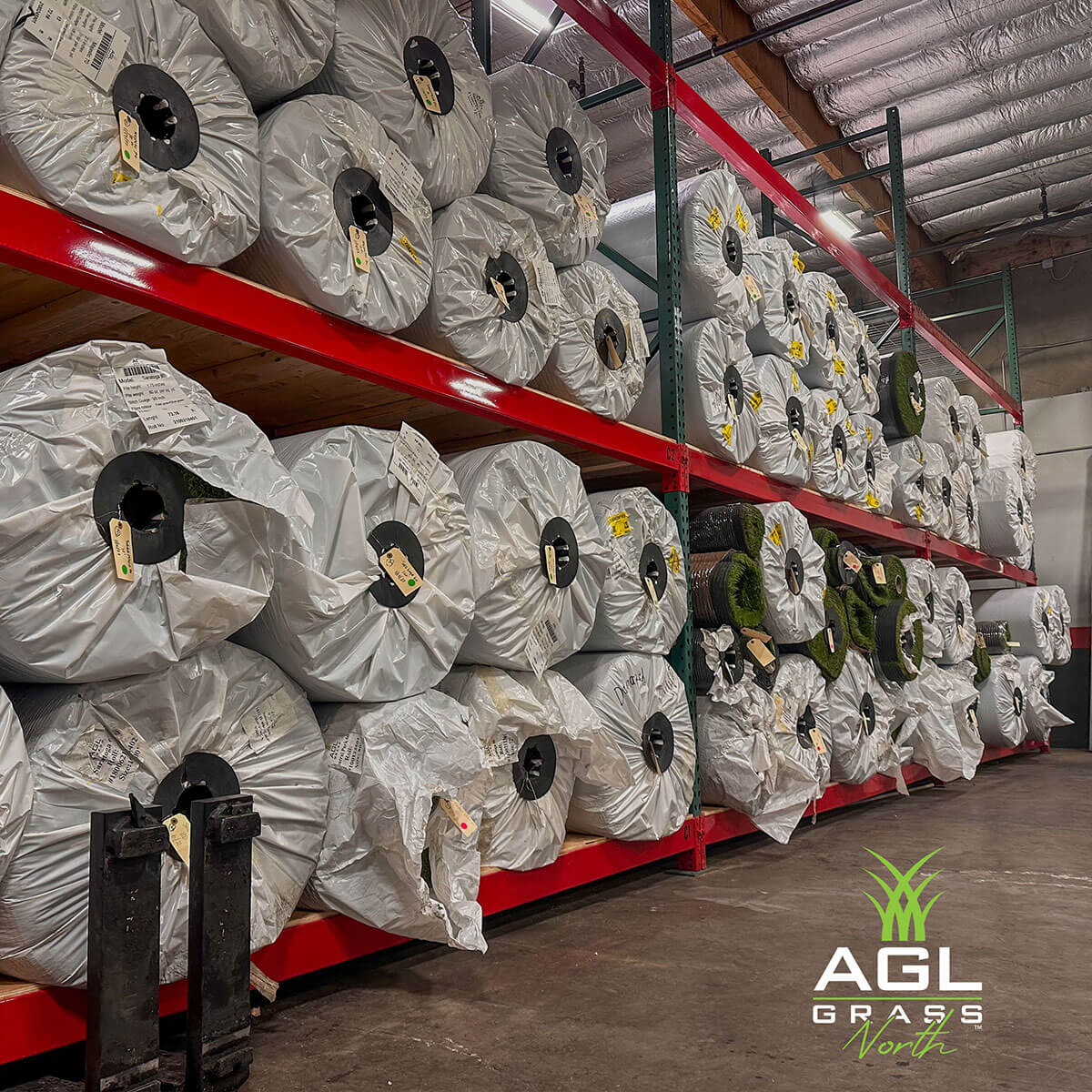
You have another one. Our Rocklin showroom stocks Pet-Friendly K9 Grass, the foundation of our pet-friendly turf systems, along with seam tape, glue, cutters, and turf spikes. If you are a contractor building a dog run for a client, a homeowner comfortable with base prep, or you want to feel the product before deciding, you can walk in and handle it.
Dog runs and side yards are also a good fit for turf remnants and short rolls, which are full-quality pieces in shorter lengths. A ten-by-fifteen-foot run rarely needs a full roll.
If you would rather have it built, AGL Grass North does not install. We connect you with certified installation contractors who work with these products regularly, so the crew already knows how the material behaves and how to handle edges and seams on a pet job.
Frequently asked questions
Is artificial grass safe for dogs?
Quality synthetic turf is safe for dogs when it is free of heavy metals and has no crumb rubber infill. Ask for the manufacturing standard rather than accepting the word “safe.” AGL Grass turf is European-made and produced to conform to DIN 18035-7 for heavy metal leaching.
How do you get rid of dog urine smell on artificial grass?
On no-infill turf, hose the area down. Odor on infill turf usually comes from the infill layer beneath the surface, which is why rinsing often fails on those products. If the infill is contaminated, it has to be removed and replaced.
Will my dog dig up artificial turf?
Most dogs stop trying within weeks because there is no loose soil to move. Persistent diggers work at edges and seams, so proper edge securing matters more on a pet installation than on a standard lawn.
Does pet turf get too hot for paws?
All synthetic surfaces warm in direct sun. No-infill turf runs cooler than infill products because there is no dark, heat-retaining layer between the blades. A rinse drops the surface temperature quickly during Placer County summers.
What pile height is best for dogs?
Around 1-3/4 inch gives dogs a comfortable surface to lie on. Read pile height alongside face weight. A tall pile with low density flattens under traffic and gets harder to clean.
Can I use pet turf in a kennel or daycare?
Yes, and no-infill turf is the stronger choice for commercial pet use because cleaning is faster and there is no infill to become contaminated and require replacement.
See it before you decide
Bring your questions to the Rocklin showroom. Feel the pile, look at the backing, and ask about the base. Whether you build the run yourself or hand it to a contractor, you will make a better call having handled the material first.
Read more

How to Build a Backyard Putting Green in Placer County
Most backyard putting green guides are penned by companies eager to install one for you. This one is from the folks that stock the turf.
Jerry
Owner, AGL Grass North

Benefits of an AGL Grass Soccer Field
The 2026 FIFA World Cup is putting soccer in front of a new generation of players right here in AGL Grass North's backyard. A no-infill AGL Grass XL Pro Sports Turf field turns that excitement into a place to actually play, today and for years after the final whistle in July.
Jerry
Owner, AGL Grass North

How long does artificial turf last in Northern California?
High-end synthetic lawns like AGL Grass can last 15 to 20 years with proper installation and maintenance, though actual lifespan may vary depending on regional climate conditions. In general, they outlast most natural lawns.
Jerry
Owner, AGL Grass North
The Best Artificial Grass for Sacramento Summers
Turf material, color, and infill all affect how hot the surface feels, with darker colors, commodity plastics, and rubber infill running hotter. Probing for details like cooling technologies, reflective pigments, lighter colors, and advanced fiber designs can help homeowners choose cooler-performing options, and AGL Grass has them.
Jerry
Owner, AGL Grass North
AGL Grass North Turf Remnants & Short Rolls
At AGL Grass North, we offer premium turf remnants and short rolls for homeowners, contractors, and DIY builders looking for a budget-friendly way to complete smaller projects. These discounted pieces come from the same no-infill, non-toxic, durable artificial grass our certified installation partners use every day. Just in smaller cuts, sold as-is. If you’re working on a compact space or a quick improvement project, remnants and short rolls are an easy, cost-effective solution.
Jerry
Owner, AGL Grass North
Is Artificial Grass Worth it in Northern California?
Artificial grass allows Sacramento homeowners to reduce water consumption during harsh, dry summers and drought mandates. Check your local water district for rebates to help with the upfront costs.
Jerry
Owner, AGL Grass North
Santa Clara's Possible Infill Toxic Turf Ban: A Greener, Safer Future?
In recent debates over urban planning and public recreation, Santa Clara, California, is considering banning traditional artificial turf that uses toxic infill. The intent behind this possible action demonstrates an increasing apprehension for environmental security and public health. This morning, we'll unpack what this means and why no-infill artificial turf might be the holy grail we've been looking for.
Jerry
Owner, AGL Grass North
The Myth of No-Infill Artificial Grass
In this article, we will cover three myths surrounding synthetic turf and the supposed need for infill. Don't believe the hype.
Jerry
Owner, AGL Grass North
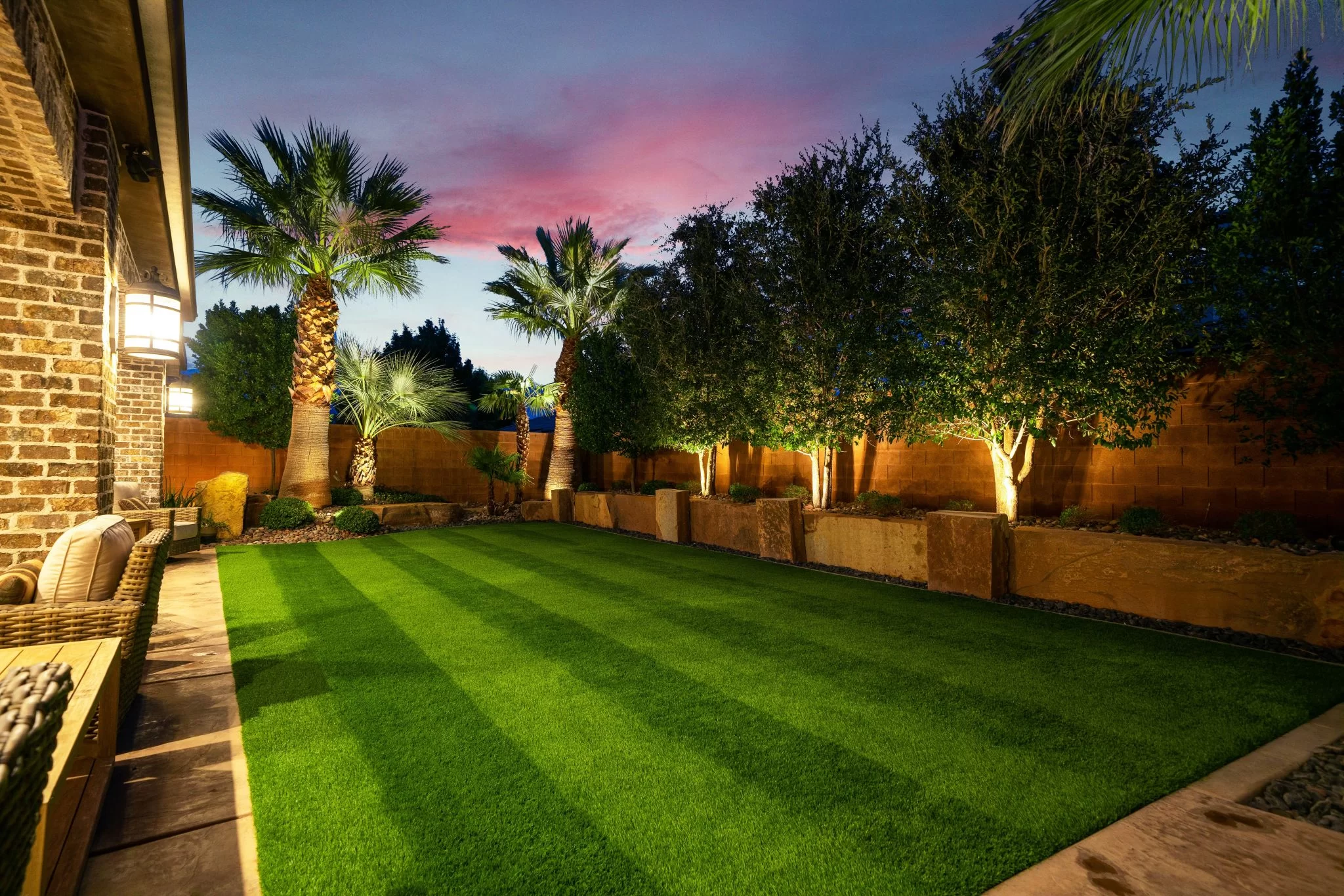
Transform Your Outdoor Space with Best-In-Class Artificial Grass
Most guides on artificial grass are written by companies that want to sell you an installed yard, which shapes what they tell you. This one is written by the people who stock the turf. Our showroom sits at 4445 Granite Drive in Rocklin, serving Greater Sacramento, Placer County, the Bay Area, the Central Valley, Reno, and the Pacific Northwest, with nationwide shipping beyond that. What follows is what actually differs between products, what Northern California does to a lawn, and where to go next depending on what you are building.
Jerry
Owner, AGL Grass North